
This November, Urban Art Village is back and bringing the buzz to its exciting new location: Te Komititanga!
Step into a vibrant pop-up village filled with 14 imaginative and interactive structures, designed and built by talented students & graduates from the University of Auckland, Auckland University of Technology, Unitec, Whitecliffe and Victoria University, to explore themes of sustainability, technology, culture and community.
For two full days on 13 & 14 November, Te Komititanga will come alive with creativity, curiosity, and hands-on fun for all ages. Come explore, engage, and be inspired by the next generation of urban designers!
Step into the world of Urban Art
The Bolthole
Matt Liggins, Professional Teaching Fellow, The University of Auckland
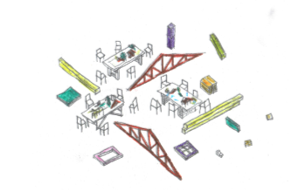
it’s been a crazy ten years since the real pyramid schemer. not much has changed. it’s probably got harder. shits got crazier out there. what do you (we) do? stay aware on what’s happening? hide? Ignore? protest?post stories? reshare stories? silence is complicity? this year Matthew double poutama becomes the bolt hole.
Remnant-Monument
Valerie Allison, Thesis Student, The University of Auckland
[Remnant//Monument] introduces the Urban Art Village installation as a two-metre-high bare steel tower: a remnant of the telecommunications system after breakdown, occupation, and reconstruction. Neither complete building nor conventional ruin, it stands as a monument to accumulated interference.
The colour of waiting - Cyanotypes
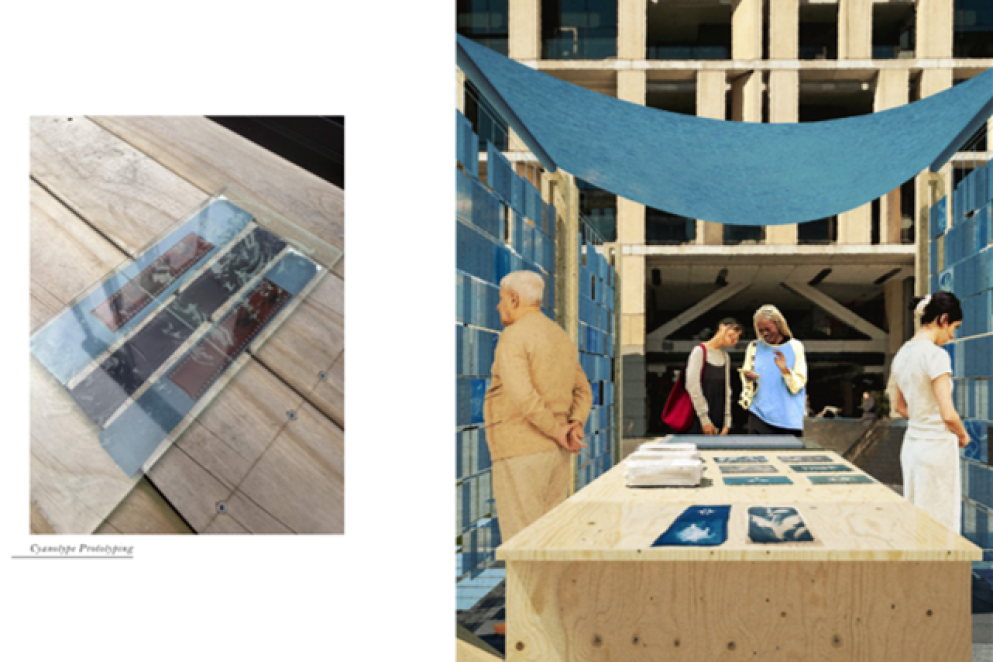
Ira Mallari, Tyson Chan, Mikaela Lai, Reese Casas, Scarlette Oliver, Marcus Nieves and Caitlin Sandall - Spatial and Interior Design Graduates of AUT
The Colour of Waiting explores the quiet growth of individuality through the overlooked journeys and memories that shape us. Using cyanotype, the exhibition reflects on memories that remain subconsciously, leaving traces without always being fully clear.
RGB
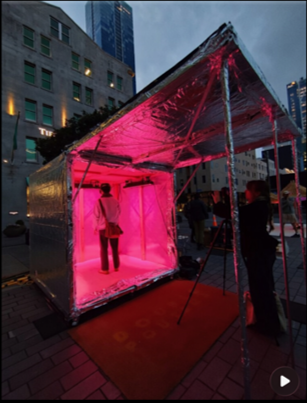
Jowen Choy, DRH, The University of Auckland
Inspired by the RGB colour model and Venn diagrams, the installation uses a depth sensor to track colour and movement, turning the body into an instrument for sound. One person can create a note, while several people can combine their colours and sounds into harmonies. As people move together, their colours and sounds overlap. The installation is fully experienced by connecting with others.
Woven
Students, Dirk Encela, Nicole Bamfield, Aldrich Rebello & Associate Professor, Yusef Patel & Lecturer, Gina Hochstein, Unitec - Sponsored by Creality
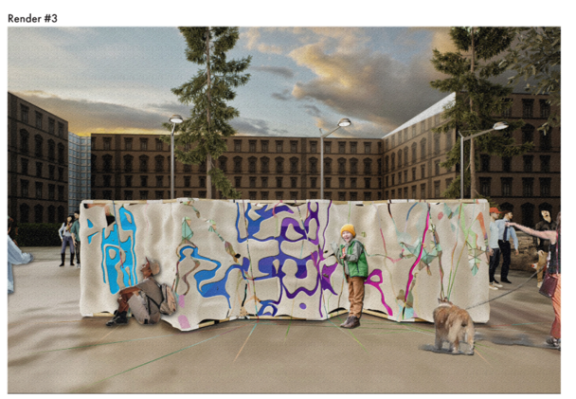
Woven is an interactive community installation exploring journey, connection, creativity, and participation. A modular timber frame, with custom 3D-printed joints, and canvas to create a flexible environment that moves between enclosure and openness.
The canvas becomes a space for self-expression and interaction, where visitors can draw, sketch, and create using markers and other artistic tools. Rather than simply observing the artwork, participants leave their own marks and ideas, allowing the installation to evolve continually throughout the event
AI Curiosity City
Tianyi Liu, Thesis Student, The University of Auckland
AI Curiosity City imagines a city that can sense, interpret, remember, and respond. A small physical Miura structure becomes the first point of encounter between the human body and an intelligent urban system. As visitors approach, move, pause, or gesture, their actions are sensed and interpreted by AI, which decides how the architecture should respond.
Cube of opposition, Ariadne's Thread, acknowledges the site of Te Komititanga as once being the foreshore / waters of the Waitemata Harbour
Artist John Kennedy
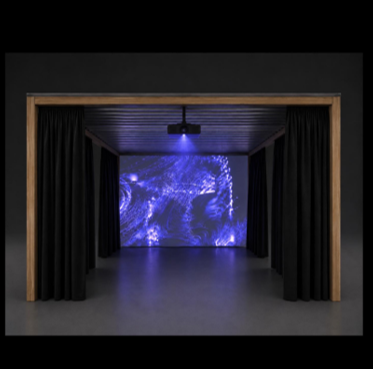
To signal this acknowledgment, Jonathan is to collect x1 9ltr bucket of water each day from the eastern edge of Queens Wharf at high tide, the 12th at 10:16, 13th at 10:55, and 14th at 11:34hrs (LINZ). Each bucket will then be hung from a black painted steel structure, the addition supporting the balance of the structure. On the 14th at 17:30hrs, the stated low tide, Jonathan will release the 27ltrs of water onto the ground of Te Komititanga Square. (Alternatively Jonathan can carry the 27ltrs back by hand and pour into the harbour from the place of initial collection.) This action is intended as a poetic public performance of retaining the tide at a site where the tide once informed human presence, and, in the end, allowing gravity to have its way.

Scarfitecture
Nina Donaldson, Thesis Student, The University of Auckland
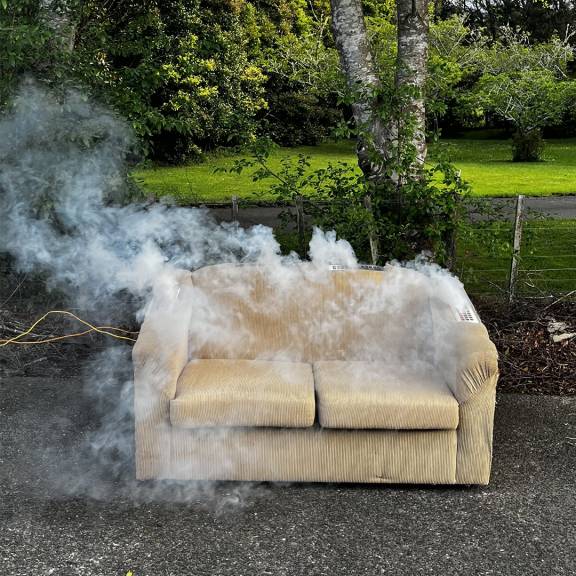
A spatial investigation into Aotearoa’s most notorious student subculture. For three days, North Dunedin takes up residence in downtown Auckland. Through four reimaginings of the humble flat couch, Scarfitecture brings audiences inside the rituals, folklore and socio-spatial practices of the Scarfie phenomenon.
archEATecture
Joshua Salosagcol, Thesis Student, The University of Auckland
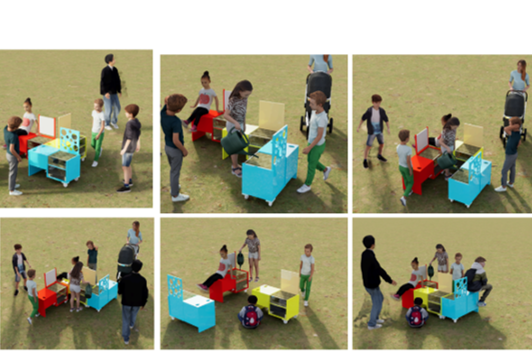
Arch-EAT-ecture is part of a thesis project on revisiting the food process, such as gardening, harvesting, cooking, eating and composting, aiming to transform it into an interactive spatial experience. The Wheelbarrow presents the ideas on a smaller scale. They are part tool, part garden and part architecture, exploring how the food process can be transformed into an accessible, playful, and educational spatial experience
Soundfishing
Sophia Schulz, DRH, The University of Auckland
An interactive touch- and sound-based installation inviting participants to create music through controlling a Textile Theremin instrument. Through harnessing tangible interactions as mediated by textiles for creative collaboration, Sound Fishing explores how we can incorporate craft, material and movement into playful interactions with the digital realm.
Wall of Waste
Erina Legasto, Thesis Student, The University of Auckland
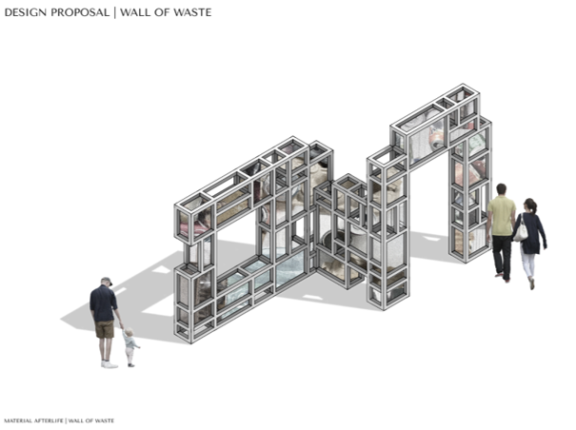
Domestic recyclable materials are often limited to conventional recycling processes where their original forms are broken down into new materials. Wall of waste is an installation from the thesis project Material Afterlife which combines the ideas of material experimentation, composition, and architectural systems.
Dancing Leaves
Stephan Webster, Graduate, Auckland University of Technology
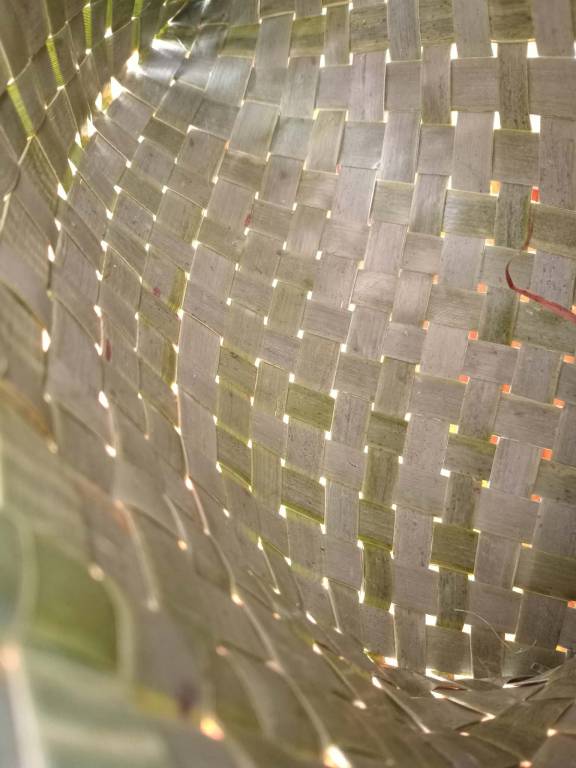
This installation proposes a shelter, derived from the forms of early settler/pioneer architectures that existed in conjunction with the extractive practices that littered Te Tai Tokerau such as logging and gum digging. These architectures were informed by building practices of Māori often using locally abundant material for thatching and cladding
brickworks
Jack, Oliver, Pat, Calvin, Iman, Philip, Graduates, Auckland University of Technology
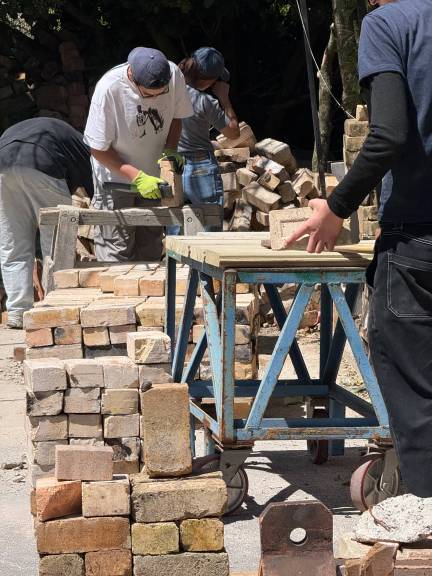
Laid above the existing brick pavement of Te Komititanga, the work adds a new layer to a place defined by accumulation: of footsteps, gatherings and the long shifting history of the reclaimed land it sits on. Brick, a humble and enduring material of the city’s foundations, becomes both memory and structure. The work is completed by those who gather on it: a collective ground built from many individual stories and continually remade through use.
A transient, get grounded tea ceremony
Ben Everitt, Graduate, Victoria University & Kyoto Timber Frames
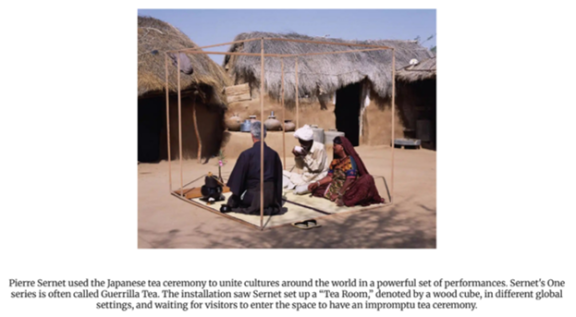
This installation assembles a portable tea house from reclaimed timber, joined with interlocking joints. Although it can move anywhere, its transience is grounded at the posts connecting to the stone pavements of Te Komititanga, using the method of "Ishibatate"
Supported by Heart of the City, Auckland Live and Tataki Auckland Unlimited through Auckland Council Events.
With our finger on the pulse for the best parking rates and tips, plus details on public transport, click here to learn more.